

Key takeaways from New Zealand’s second Emissions Reduction Plan
New Zealand’s recently released second “Emissions Reduction Plan” outlines how the Government intends to achieve New Zealand’s emissions reduction targets for the 2026 – 2030 period.
Following a period of consultation in mid-2024, the Government has released its final plan for the second emissions budget period of 2026 – 2030.
While the second Emissions Reduction Plan (ERP2) ultimately seeks to progress New Zealand towards achieving the same domestic emissions reduction targets as the first Emissions Reduction Plan (ERP1), ERP2 represents a significant change in approach in how the Government intends to do so. In this article, we summarise the proposals raised by ERP2 and the implications of these proposals on New Zealand’s key sectors.
Background
Emissions reduction targets and emissions budgets
The Climate Change Response Act 2002 (CCRA) enshrines the following domestic emissions reduction target in legislation:
- Net zero greenhouse gas emissions (other than biogenic methane) annually by 2050;
- 10% less biogenic methane emissions than 2017 emissions levels by 1 January 2030; and
- 24% to 47% less biogenic methane emissions than 2017 levels by 1 January 2050.
As stepping stones towards achieving the net zero 2050 target, the CCRA establishes an “emissions budget” system. Each budget represents the net emissions that New Zealand may emit during the period covered by that budget. With the exception of the first budget for 2022 – 2025, each budget covers a five-year period.
The first three emissions budgets are as set out below:

All figures represent metric tonnes of carbon dioxide equivalent (MtCO₂e).
ERP1 and the first emissions budget
ERP1 was released by the former Government in May 2022. It related to the first emission budget period of 2022 – 2025. It detailed its intended policies and proposals for reducing the emissions of several key sectors, including transport, energy, forestry, waste, construction and agriculture.
ERP1 placed an emphasis on emissions reductions in the transport and energy sectors, with the Government at the time seeing these as sectors in which quick but meaningful reductions could be achieved with already-available technologies and processes. It sought to realise these quick gains via the adjustment of regulatory settings and by incentivising low-emissions behaviour by making available targeted Government funding (such as via the Clean Car Discount and the Government Investment in Decarbonising Industry Fund) alongside disincentives for high emissions activities, such as the “Ute Tax”. Alongside this, the Government continued to recognise and encourage the sequestration of carbon via forestry and the emissions trading scheme (ETS).
Agriculture took somewhat of a back in ERP1 in regard to gross emissions reductions, with the Government instead seeking to establish a separate emissions pricing scheme for that sector in consultation with various industry groups under the He Waka Eke Noa.
ERP1 and the first emissions budget period have proved a success, with New Zealand on track to emit 284.1MtCO₂e for the years of 2022 – 2025, coming in 5.9MtCO₂e beyond the target. He Waka Eke Noa however did not result in an agricultural emissions pricing scheme being put in place, and the current Government has now delayed the pricing of agricultural emissions until “no later than 2030”.
Emissions reductions by sector
A snapshot of the proposed emissions reductions by sector
While ERP1 heavily emphasised emissions reductions in the transport sector, ERP2 is relying on anticipated emissions reductions in the agriculture sector. Both ERP1 and ERP2 also rely on emissions reductions in the energy sector, as well as on the continued sequestering of carbon by the forestry sector, as key to meeting their respective emissions budgets.
The Government has stated that the policies and targets in ERP2 have been set based on the guiding principles of achieving a “least cost” transition to net zero, with a focus on policies which the Government hopes will maximise the emissions reduction achieved for each dollar spent. The below diagram sets out the proposed reductions on a sector by sector basis for the second emissions budget period based on the proposed policies for ERP2.
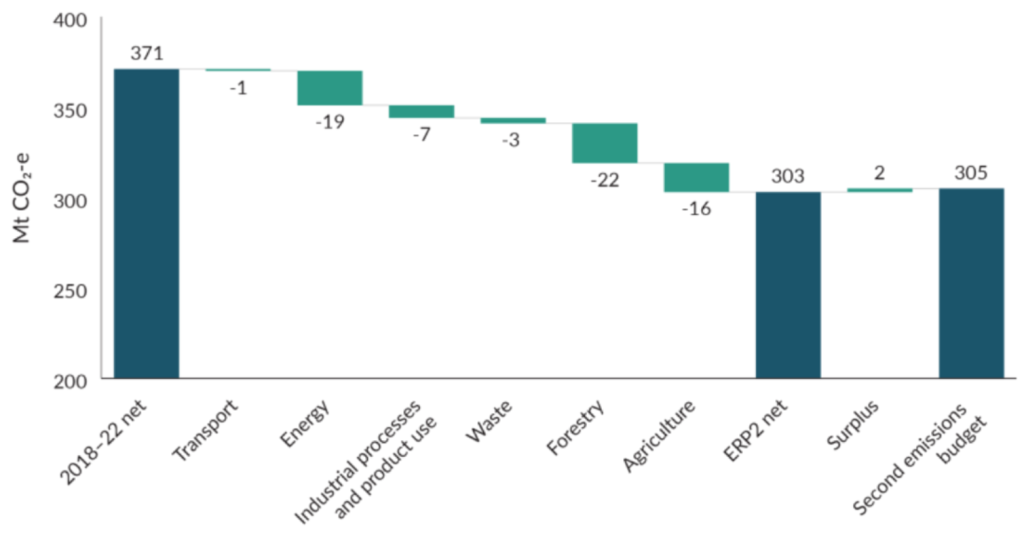
Source: ERP2 page 16. Projections have been rounded to the nearest whole number.
While the reductions as projected are sufficient to allow New Zealand to achieve the second emissions budget, projections based on ERP2’s policies suggest that New Zealand will fail to meet the 2031 – 2035 emissions budget under the proposals by an estimated 9.2MtCO₂e.
Agriculture’s role in ERP2
Agriculture accounts for over 50% of New Zealand’s gross emissions. Despite this fact, New Zealand’s agriculture sector is among the most climate-efficient in the word, and the Government aims to reduce emissions in a manner that does not lead to “emissions leakage” – where efforts to reduce emissions domestically lead to production simply shifting overseas to countries that do not have comparable regulations and therefore face less production costs.
The Government therefore seeks to take a “technology-led” approach to managing agricultural emissions, and intends to rely on technological breakthroughs and innovation to decrease emissions in the sector.
The proposed policies for this sector in ERP2 include:
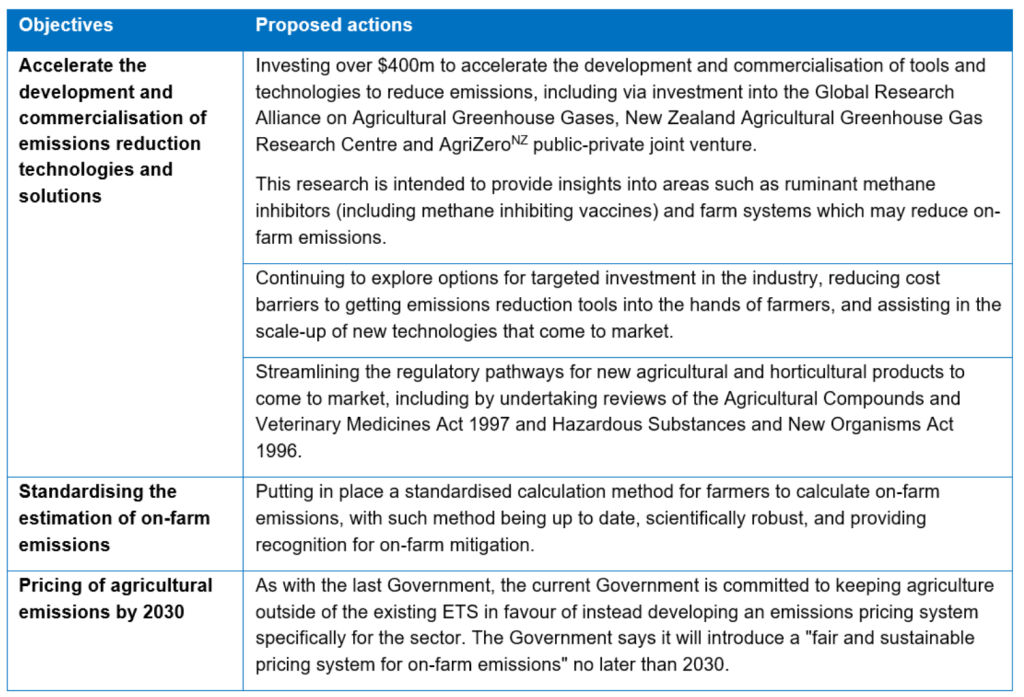
Given that agriculture is one of the main sectors that ERP2 relies upon in order to achieve the second emissions budget, it is crucial that the Government’s investment in research and development produces effective results which are capable of being implemented on-farm at a rapid pace.
Energy’s role in ERP2
Emissions from energy usage (including from transport) make up approximately 37% of New Zealand’s gross emissions. Due to our high level of renewable generation already in New Zealand, the country is well placed to further decrease emissions in the sector.
The proposed policies for this sector in ERP2 include the following:
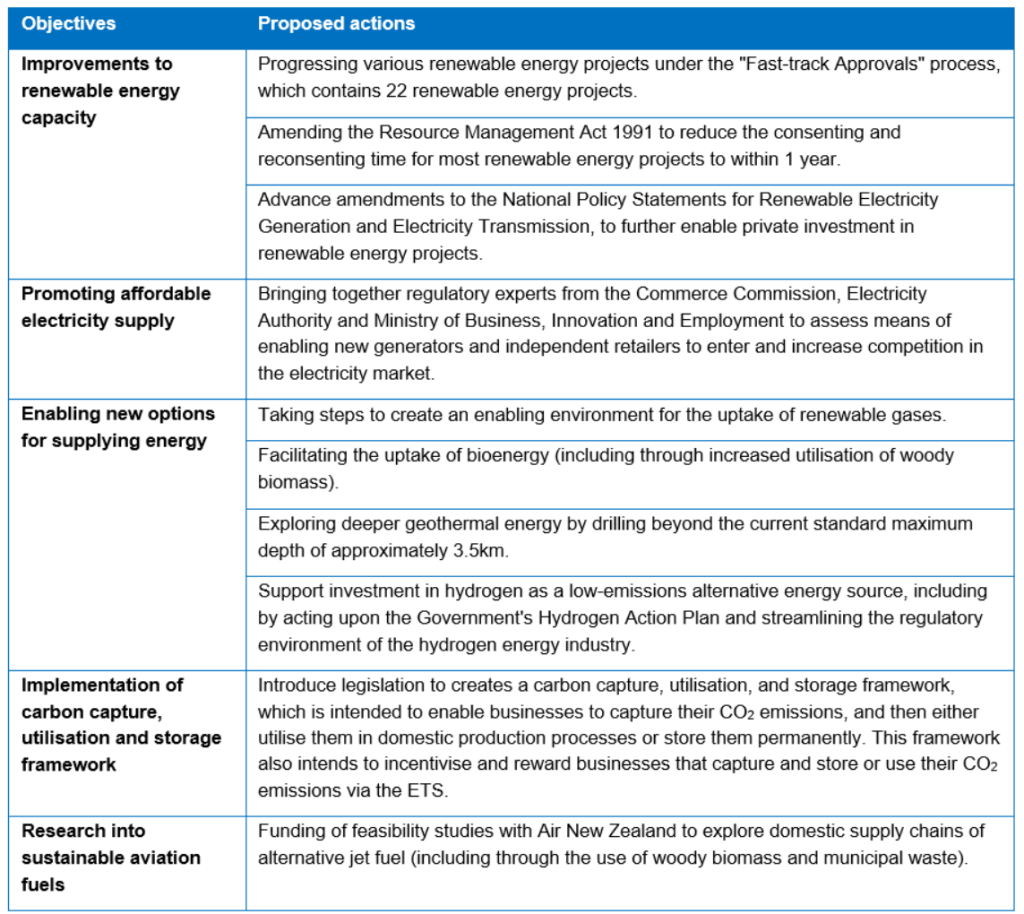
Alongside agriculture, energy is a sector in which the Government expects to make a large amount of its emissions reductions through the second emissions budget. ERP2 recognises that the shift towards an electrified economy will come with substantial work in order to maintain the reliability of the grid, with an estimated $100 billion of investment needed by 2050 to build and maintain this infrastructure.
Forestry’s role in ERP2
As with ERP1, ERP2 recognises that the forestry sector has a key role to play in our climate response. This is in part due to the fact that forests act as “carbon sinks”, sequestering carbon from the atmosphere. These removals can be incentivised and rewarded within the ETS, in order to drive further afforestation, and therefore further sequestration, helping to reduce net emissions in the short term.
The proposed policies for this sector in ERP2 include the following:
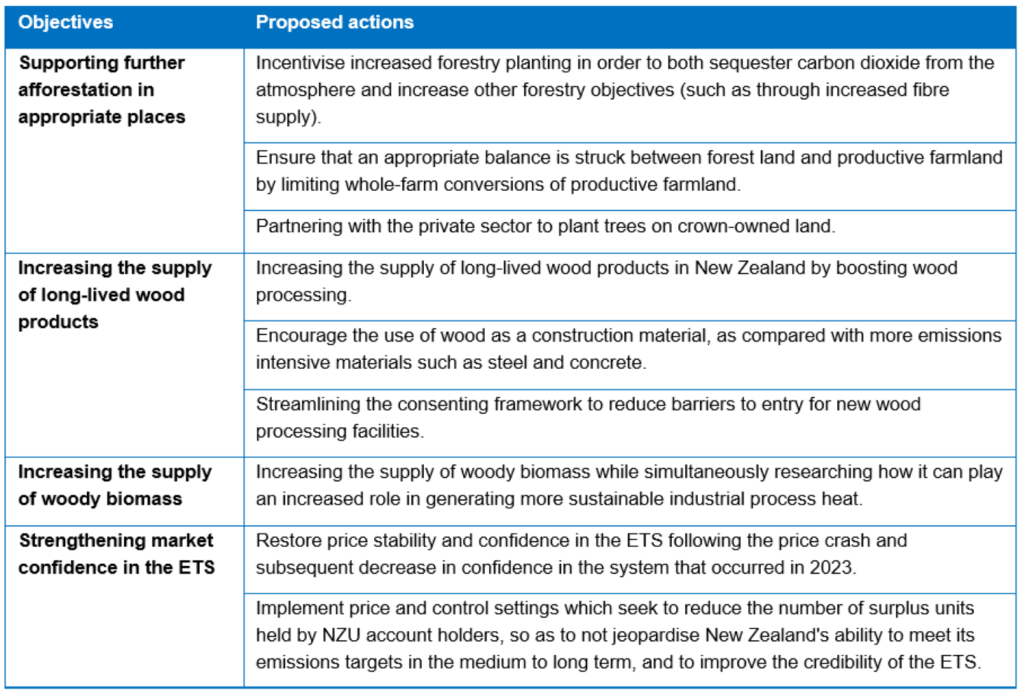
As with ERP1, ERP2 relies heavily on the forestry sector to bring the largest emissions reductions throughout the second emissions budget period via sequestration. While this brings clear benefits in the short term, these benefits will eventually plateau as the gains will start to be offset by the carbon losses caused by the eventual harvesting and natural decay of the forests. ERP2 looks to address this by leveraging fully grown forests for the supply of long-lived wood products, which can then act as long term carbon storage.
Waste’s role in ERP2
The waste sector is responsible for approximately 4.5% of New Zealand’s gross greenhouse gas emissions. This is largely comprised of methane, which accounts for 93.3% of the sector’s emissions. Accordingly, ERP2’s proposed policies in this sector largely target methane emissions.
The proposed policies for this sector in ERP2 include the following:
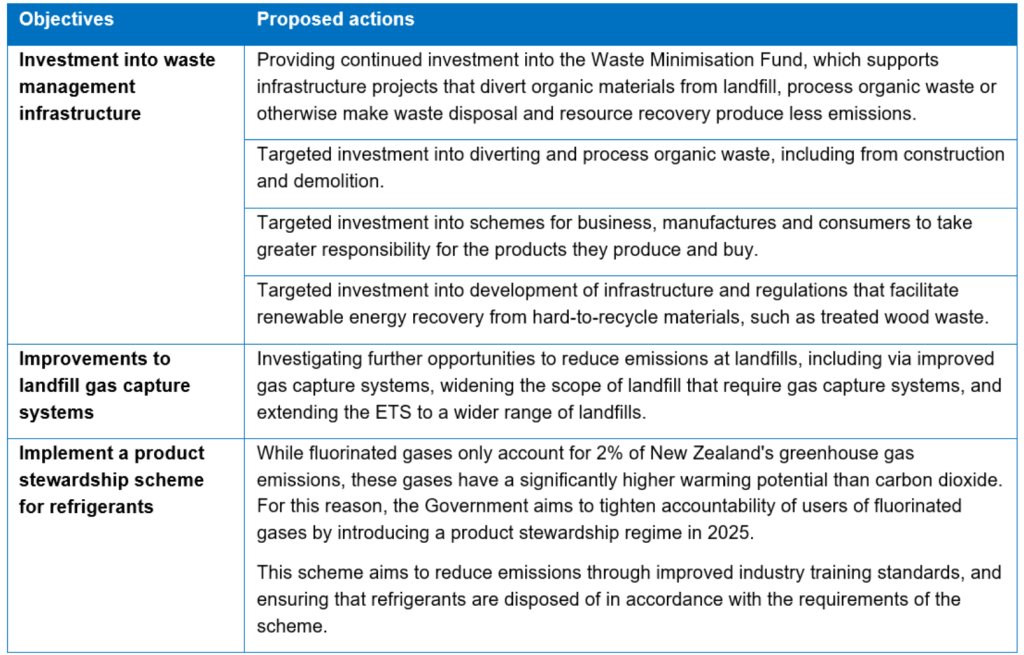
As with the previous Government’s proposals under ERP1, the current Government is again taking a multi-pronged approach to its waste strategy by seeking to:
- reduce the amount of waste generated overall;
- reduce the amount of waste that is generated going to landfill, by diverting it to other uses; and
- capture the gas emitted by waste at landfills, minimising the emissions that enter the atmosphere.
Transport’s role in ERP2
Transport is responsible for approximately 17.5% of New Zealand’s greenhouse gas emissions, with the vast majority (approximately 90%) being from road transport.
The proposed policies for this sector in ERP2 include the following:
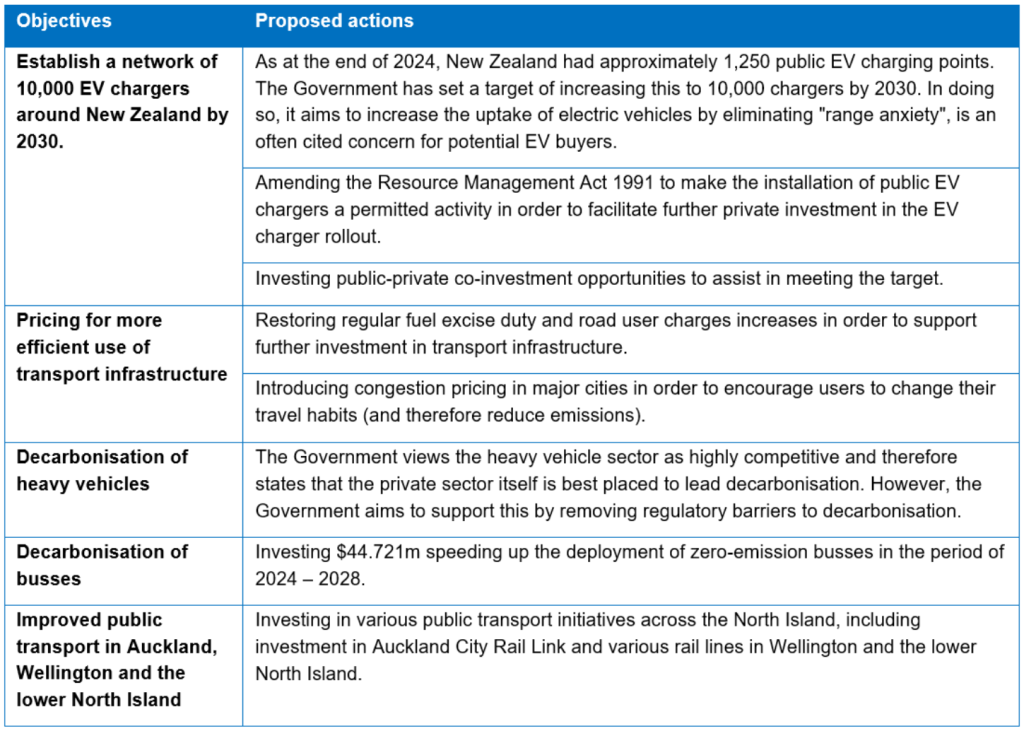
While ERP1 sought to rapidly decrease transport emissions via direct financial incentives and disincentives (such as the Clean Car Discount and the “Ute Tax”), ERP2 has opted to take a more passive approach in the short term. The Government is only expecting a minor decrease in net emissions this sector over the second emissions budget period.
Conclusion
As has been the plan since the release of the emissions budgets in 2022, the second emissions budget period is when New Zealand’s emissions are expected to peak, followed by substantial decreases in emissions beginning in the third emissions budget period of 2031 – 2035. The Government has a significant task ahead of it in maintaining the momentum gained in the first emissions budget period, with that budget expected to be met at the end of this year. With many of the emissions reduction methods proposed in ERP2 relying on research, development and commercialisation that is yet to occur, it is essential that the Government commits to supporting this research and development to sufficient levels so as to achieve the second emissions budget, continuing New Zealand’s journey to net zero 2050.
Want to know more?
If you have any questions about ERP2, please contact our specialist ESG Team.
Credit to Tom Mohammed for this article.